How to File a Water Damage Insurance Claim: Everything Homeowners Need to Know
- Revive Restoration
- Jul 29
- 5 min read
Few things are more stressful than discovering water damage in your home. Whether it’s caused by a burst pipe, overflowing appliance, roof leak, or plumbing failure, knowing how to properly file an insurance claim can make the restoration process much smoother.
Many homeowners unknowingly make mistakes in the first few hours after water damage that can complicate or delay their claim. This guide explains what to do, what to avoid, and how to work with your insurance company after a water damage loss.
If your home has experienced water damage in Boise, Meridian, Eagle, Nampa, Caldwell, Kuna, Star, Middleton, or Garden City, taking the right steps early can help protect both your home and your insurance claim.
What You’ll Learn
What types of water damage insurance typically covers
What to do immediately after discovering water damage
How to document your loss
How to file a water damage insurance claim
What happens after you file a claim
How insurance adjusters evaluate water damage
Common claim mistakes to avoid
Frequently asked questions
Does Homeowners Insurance Cover Water Damage?
Many homeowners are surprised to learn that insurance doesn’t cover every type of water damage.
In general, homeowners insurance is designed to cover sudden and accidental water damage—not damage caused by neglect or long-term maintenance issues.
Claims are often covered when water damage results from:
Burst pipes
Sudden plumbing failures
Overflowing appliances
Accidental discharge from plumbing systems
Certain roof leaks caused by covered storm damage
Claims are often not covered when damage results from:
Long-term leaks
Poor maintenance
Wear and tear
Groundwater or flooding (unless covered by a separate flood policy)
Repeated or unresolved water intrusion
Every insurance policy is different. Always review your specific policy or speak with your insurance company to understand your coverage.
What Should You Do Immediately After Discovering Water Damage?
1. Stop the Water Source
If possible:
Shut off the main water supply.
Turn off the affected appliance.
Stop additional water from entering the home.
The faster the source is stopped, the less damage your home is likely to sustain.
2. Protect Your Family
Water can create serious hazards.
Watch for:
Electrical hazards
Slip hazards
Contaminated water
Ceiling collapse risks
If you’re unsure whether an area is safe, avoid entering it until it has been evaluated.
3. Document Everything
Before moving belongings, take photos and videos of:
The source of the water
Every affected room
Walls
Flooring
Ceilings
Cabinets
Furniture
Electronics
Personal belongings
Good documentation can help support your insurance claim.
4. Prevent Additional Damage
Most homeowners policies require you to take reasonable steps to prevent further damage after a loss.
Examples include:
Moving furniture
Removing standing water if safe
Covering roof openings with a tarp
Shutting off water
Beginning professional mitigation
Failing to mitigate additional damage may affect portions of a claim.
5. Contact Your Insurance Company
Report the loss as soon as practical.
Most insurance companies will ask for:
Policy number
Date of loss
Cause of damage
Contact information
Description of affected areas
6. Contact a Water Damage Restoration Company
Professional mitigation should begin as soon as possible.
Quick drying can significantly reduce:
Mold growth
Structural damage
Flooring damage
Cabinet damage
Drywall damage
How Do You File a Water Damage Insurance Claim?
Although every insurance company is different, the process is generally similar.
Step 1: Report the Claim
Contact your insurance carrier using their claims phone number or online portal.
Step 2: Receive a Claim Number
Write down:
Claim number
Adjuster’s name
Contact information
You’ll use this information throughout the restoration process.
Step 3: Schedule an Inspection
Your insurance company may assign an adjuster to inspect the property.
The adjuster documents:
Cause of loss
Extent of damage
Coverage
Scope of repairs
Step 4: Continue Mitigation
Do not wait days for the adjuster before beginning emergency drying if additional damage is occurring.
Insurance policies generally expect homeowners to take reasonable steps to reduce ongoing damage.
Step 5: Review the Estimate
Once the investigation is complete, your insurance company will determine what is covered under your policy.
If you have questions about coverage, discuss them directly with your adjuster.
National Water Damage Claim Statistics
What Does a Water Damage Restoration Company Do?
A professional restoration company focuses on protecting your home from additional damage.
Typical services include:
Moisture inspection
Water extraction
Structural drying
Equipment monitoring
Selective demolition when necessary
Moisture documentation
Daily drying reports
Many restoration companies also provide documentation that may assist your insurance company in evaluating the claim. Revive Restoration provides this service.
What Will the Insurance Adjuster Look For?
Adjusters commonly evaluate:
Cause of loss
Whether the damage was sudden or gradual
Moisture extent
Damaged building materials
Personal property damage
Signs of previous leaks
Evidence that additional damage was minimized
They may also review:
Photographs
Moisture documentation
Repair invoices
Restoration reports
Common Mistakes Homeowners Make
Waiting Too Long
Water damage continues to spread long after the leak stops.
Delaying mitigation increases the likelihood of:
Mold growth
Material deterioration
Larger repairs
Throwing Damaged Items Away Too Soon
Unless they create a health hazard, keep damaged materials until your insurance company advises otherwise or documents them.
Take photos before disposing of anything.
Forgetting to Photograph the Damage
Many homeowners begin cleaning immediately.
Always document the damage before moving belongings whenever possible.
Ignoring Small Leaks
Even small plumbing leaks can eventually lead to:
Mold
Wood rot
Drywall damage
Flooring damage
Assuming Everything Is Covered
Insurance policies vary significantly.
Never assume coverage until your insurance company reviews your claim.
Tips for a Smoother Insurance Claim
Report the claim promptly.
Take clear photos and videos.
Save receipts for emergency expenses.
Keep notes of conversations with your insurance company.
Ask questions if you don’t understand your coverage.
Begin professional mitigation quickly.
Maintain copies of important documents.
Frequently Asked Questions
Should I call my insurance company before calling a restoration company?
Ideally, contact both as soon as possible. If water is actively damaging your home, emergency mitigation should not be unnecessarily delayed.
Will filing a claim increase my insurance premiums?
Premium changes depend on many factors, including your insurer, claim history, state regulations, and the nature of the loss. Your insurance company can explain how a claim may affect your policy.
Do I have to use the restoration company recommended by my insurance company?
In many cases, homeowners may choose their own qualified restoration contractor. If you’re unsure about your rights, ask your insurance company or review your policy.
What if mold develops after the leak?
Prompt drying greatly reduces the risk of mold, but coverage for mold varies by policy and the cause of the water damage.
How long does the insurance claim process take?
The timeline varies depending on the extent of the damage, the complexity of the claim, and your insurance company’s procedures.
Final Thoughts
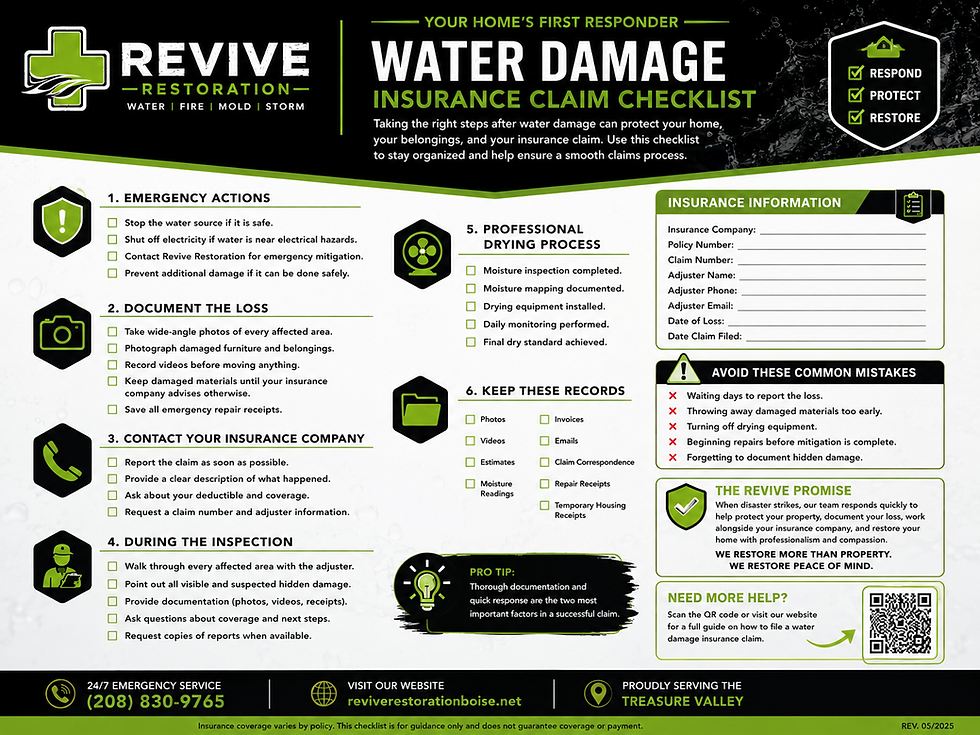
Filing a water damage insurance claim can feel overwhelming, but taking the right steps early can make the process much more manageable. Prioritize safety, stop the source of the water, document the damage thoroughly, and begin mitigation as soon as possible to help protect your home from further damage.
At Revive Restoration, we provide 24/7 emergency water damage mitigation throughout Boise, Meridian, Eagle, Nampa, Caldwell, Kuna, Star, Middleton, and Garden City. Our team documents moisture conditions, performs professional structural drying, and works closely with homeowners throughout the mitigation process to help restore their property efficiently.


Comments